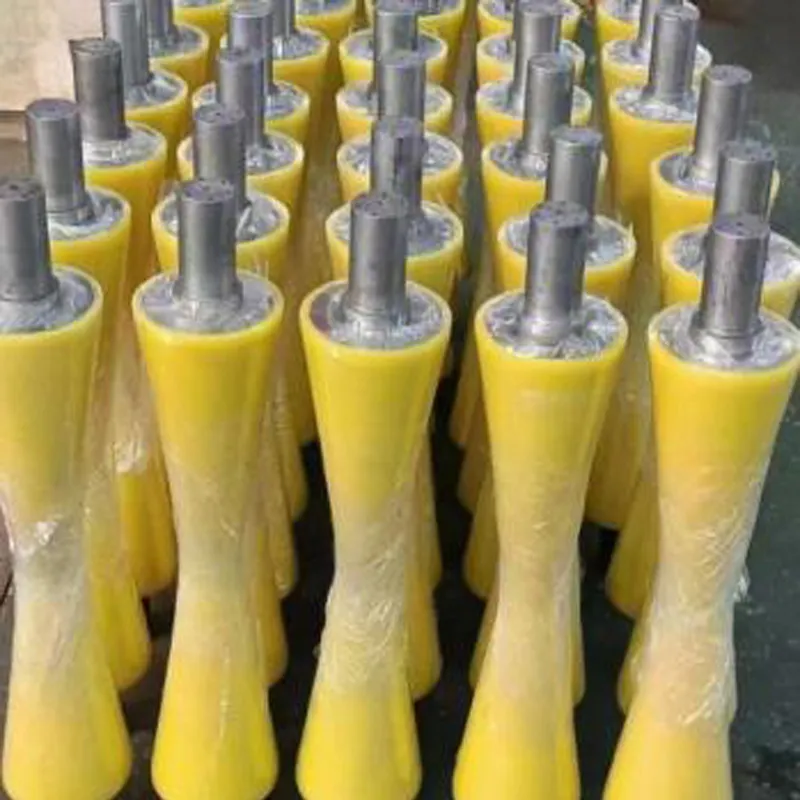
Introduction to High-Performance Polyurethane Impeller Technology In demanding industrial environments where abrasive slurries and corrosive chemicals are routinely processed, the choice of equipment materials significantly impacts operational efficiency, maintenance costs, and overall system longevity. The Polyurethane Impeller stands out as a critical component engineered to excel in such challenging conditions. Renowned for its superior abrasion resistance, chemical inertness, and exceptional durability, polyurethane offers a compelling alternative to traditional metal or rubber impellers, particularly in applications requiring extended service life and reduced downtime. This article delves into the technical intricacies, application advantages, and strategic considerations surrounding the implementation of advanced polyurethane impeller solutions. Industries ranging from mining and mineral processing to chemical manufacturing and wastewater treatment increasingly rely on specialized materials that can withstand severe operational stresses. Polyurethane, a versatile polymer, is custom-formulated to deliver optimal performance, resisting wear from particle impact, cavitation, and chemical degradation. Its inherent flexibility also contributes to noise reduction and vibration dampening, enhancing overall system stability and operator comfort. Understanding the material science and manufacturing precision behind these components is crucial for B2B decision-makers seeking to optimize their fluid handling systems. Industry Trends and Material Innovations The landscape of industrial fluid dynamics is continuously evolving, driven by demands for increased efficiency, reduced environmental impact, and lower total cost of ownership (TCO). Current trends highlight a significant shift towards advanced engineered polymers, with polyurethane leading the charge. Innovations in polymer chemistry allow for the tailoring of specific properties, such as hardness (Shore A to D), tensile strength, tear resistance, and hydrolysis resistance, directly impacting impeller performance. Key trends include: Enhanced Abrasion Resistance: Continuous R&D into proprietary polyurethane formulations yields materials with significantly extended wear life, even in highly abrasive slurry applications. This minimizes replacement frequency and maintenance labor. Chemical Compatibility: Development of specialized polyurethane grades capable of withstanding a broader range of aggressive chemicals, acids, and alkalis, expanding their utility in chemical processing and wastewater treatment. Energy Efficiency: Lightweight designs and smoother surface finishes of Polyurethane Impeller reduce rotational inertia and fluid friction, contributing to lower energy consumption for pumping systems. Sustainable Manufacturing: Efforts to reduce the environmental footprint of polyurethane production, including solvent-free processes and exploration of bio-based polyols. Additive Manufacturing Integration: While not yet mainstream for large-scale impellers, additive manufacturing is being explored for prototyping and producing complex geometries, offering faster iteration and potentially custom designs. These trends underscore a commitment to engineering solutions that not only meet but exceed the operational demands of modern industrial applications, positioning polyurethane as a material of choice for critical pump components. Detailed Manufacturing Process of Polyurethane Impellers The production of a high-performance Polyurethane Impeller is a multi-stage process demanding precision and strict quality control. It integrates advanced material science with sophisticated manufacturing techniques to ensure optimal mechanical and chemical properties. Step 1: Material Selection and Preparation Materials: High-grade polyether or polyester polyols are selected based on the desired chemical resistance and mechanical properties, combined with specific isocyanates (e.g., MDI, TDI). Additives such as catalysts, cross-linkers, pigments, and UV stabilizers are incorporated to fine-tune the final properties. Raw materials undergo rigorous quality checks to meet internal standards and industry specifications (e.g., ASTM D2240 for hardness). Step 2: Mold Design and Fabrication Process: Precision molds, often made from steel or aluminum, are designed using CAD/CAM software to achieve the exact impeller geometry. CNC machining ensures tight tolerances for dimensional accuracy. Mold surfaces are treated for optimal release and surface finish. Step 3: Polyurethane Casting Process: The pre-weighed polyol and isocyanate components are mixed in precise ratios, often under vacuum to eliminate air bubbles. This mixture is then poured (cast) into the preheated molds. Depending on the specific formulation and desired properties, various casting techniques might be employed, including open casting, centrifugal casting (for enhanced density and uniformity), or reaction injection molding (RIM) for faster cycle times and complex shapes. Step 4: Curing and Demolding Process: The cast impellers undergo a controlled curing process in ovens at specific temperatures and durations. This thermal treatment ensures complete polymerization and cross-linking, optimizing the physical properties of the polyurethane. After curing, the impellers are carefully demolded. Step 5: Post-Processing and Finishing Process: Demolded impellers are trimmed to remove flash, and critical dimensions are verified. Surface finishing, such as grinding or polishing, may be applied to achieve precise hydrodynamic profiles and reduce friction. If a metal hub is integrated, it's typically bonded securely to the polyurethane through chemical adhesion and mechanical interlocking. Step 6: Quality Control and Testing Testing Standards: Each Polyurethane Impeller undergoes stringent quality control. This includes dimensional inspection (ISO 2768-1, ANSI B4.1), material hardness testing (ASTM D2240), tensile strength and elongation (ASTM D412), tear strength (ASTM D624), and specific gravity (ASTM D792). Dynamic balancing (ISO 21940) is performed to prevent vibration and ensure smooth operation. For critical applications, accelerated wear tests and chemical immersion tests are conducted. Service Life: When manufactured to these exacting standards, a Polyurethane Impeller can achieve a service life 3-5 times longer than traditional rubber or cast iron impellers in abrasive environments, significantly reducing maintenance cycles and associated costs. Target Industries: Petrochemical, Metallurgy, Mining, Water Supply & Drainage, Chemical Processing, Pulp & Paper, Sand & Gravel operations. Demonstrated Advantages: In a typical mining slurry pump scenario, a polyurethane impeller can reduce energy consumption by up to 15% due to its lighter weight and smoother hydraulic surfaces, while offering superior corrosion resistance against acidic tailings compared to unlined metallic alternatives. Technical Specifications and Parameters The performance of a polyurethane impeller is defined by a range of technical parameters, each optimized for specific operational requirements. Understanding these specifications is paramount for engineers and procurement specialists. Typical Polyurethane Impeller Material Specifications Property Test Method (ASTM/ISO) Typical Value (Polyether TPU) Benefits in Application Hardness (Shore A/D) ASTM D2240 85-95A / 40-60D Optimized for wear vs. flexibility, preventing cutting/tearing. Tensile Strength ASTM D412 35-50 MPa (5000-7250 psi) Resistance to stretching and tearing under dynamic load. Elongation at Break ASTM D412 400-600% High resilience and shock absorption, reducing impact damage. Tear Strength ASTM D624 (Die C) 60-100 kN/m (340-570 pli) Excellent resistance to tear propagation from sharp objects. Specific Gravity ASTM D792 1.12-1.25 g/cm³ Lighter than metals, reducing inertia and energy consumption. Abrasion Resistance ASTM D1630 (Taber) 0.05-0.10 cm³ loss (H-22 wheel, 1000g, 1000 cycles) Superior wear life in abrasive slurry applications. Max. Operating Temp. Internal Test Data 80-100°C (176-212°F) Suitable for many high-temperature industrial processes. These values represent typical ranges for high-quality engineering-grade polyurethanes. Specific formulations can be adjusted to meet unique environmental and performance criteria, ensuring the Polyurethane Impeller delivers peak performance and longevity in its intended application. Application Scenarios and Case Details The versatility of polyurethane allows its impellers to be deployed across a broad spectrum of challenging industrial operations. Their enhanced properties translate directly into tangible operational benefits. Mining and Mineral Processing In mineral processing, pumps handle highly abrasive slurries containing quartz, iron ore, and other hard particles. Traditional metal impellers suffer rapid wear, leading to frequent replacements and significant downtime. Polyurethane Impeller s offer significantly extended wear life. For instance, in a gold mine’s tailings slurry pump handling 30% solids by weight at 1.2 SG, a client reported that polyurethane impellers lasted 9 months compared to 3 months for their previous high-chrome iron impellers. This resulted in a 67% reduction in impeller replacement frequency and a 20% reduction in annual maintenance costs for that particular pump station. Chemical and Pharmaceutical Manufacturing Chemical resistance is paramount in these sectors. Polyurethane impellers are ideal for pumping various acids, bases, and organic solvents, provided the specific polyurethane formulation is chosen for compatibility. In a pharmaceutical plant handling a moderately acidic catalyst solution (pH 4.0), metallic impellers showed signs of pitting corrosion within weeks. Switching to a specialized ester-based polyurethane impeller provided a robust solution, lasting over 18 months without degradation, ensuring product purity and process reliability. Customer feedback highlighted "unprecedented chemical resistance and minimal product contamination risks." Wastewater Treatment and Water Supply Pumps in wastewater treatment often handle liquids containing abrasive grit, organic solids, and various chemicals. Polyurethane impellers’ abrasion resistance and chemical stability make them well-suited. In a municipal wastewater treatment plant, grit pump impellers were eroding quarterly. After installing polyurethane units, the impellers consistently achieved an 18-month service life, drastically reducing labor for component change-outs and preventing unscheduled system outages. The reduced vibration also contributed to quieter operation, an unexpected but welcome benefit for the operators. These real-world scenarios demonstrate how strategic adoption of Polyurethane Impeller technology leads to substantial improvements in operational uptime, reduced maintenance, and improved safety across diverse industrial applications. Key Technical Advantages of Polyurethane Impellers The selection of a Polyurethane Impeller over traditional materials offers a host of distinct technical advantages that directly translate into operational efficiencies and cost savings: Superior Abrasion Resistance: Polyurethane's unique elastomeric properties allow it to absorb impact energy from abrasive particles, resisting cutting, gouging, and erosion far more effectively than metals or harder plastics. This leads to significantly extended wear life, particularly in slurry and sand-laden applications. Exceptional Chemical Resistance: Depending on the specific formulation (e.g., polyether vs. polyester based), polyurethane impellers can withstand a broad range of acids, alkalis, oils, and solvents. This makes them ideal for chemical processing where corrosion is a major concern for metallic components. Reduced Weight and Inertia: With a specific gravity typically around 1.2 g/cm³, polyurethane is considerably lighter than metals (e.g., stainless steel at ~8 g/cm³). This reduced mass lowers rotational inertia, resulting in quicker motor starts, reduced strain on bearings, and potentially lower energy consumption. Noise and Vibration Dampening: The inherent flexibility and damping characteristics of polyurethane help to absorb mechanical vibrations and reduce operational noise levels, contributing to a more stable and quieter pumping system, and potentially extending the life of other pump components. Cavitation Resistance: Polyurethane's elasticity helps it resist the damaging effects of cavitation, where collapsing vapor bubbles can cause severe pitting and material loss in rigid impellers. This enhances performance and longevity in challenging hydraulic conditions. Impact Resistance: Its high elongation and tear strength provide excellent resistance to impact, protecting against damage from unexpected large solids entering the pump. Lower Total Cost of Ownership (TCO): While the initial cost of a specialized polyurethane impeller might be higher than a standard metallic one, its extended service life, reduced maintenance requirements, and potential energy savings lead to a significantly lower TCO over the operational lifespan of the equipment. Vendor Comparison: Selecting the Right Partner Choosing the right vendor for Polyurethane Impeller s is as critical as selecting the material itself. A reputable supplier offers not just a product, but a partnership built on expertise, quality assurance, and responsive support. Here’s a comparative view of key vendor attributes: Key Vendor Comparison Factors Feature/Attribute Leading Supplier (e.g., QW Metal) Standard Manufacturer Value Proposition Material R&D & Formulation Proprietary blends, application-specific polymers. Standard commercial grade polyurethanes. Optimized performance for harsh environments. Manufacturing Precision CNC machined molds, ISO 9001 certified process. Standard casting, general tolerance. Enhanced hydraulic efficiency, dynamic balance. Customization Capabilities Full engineering support, bespoke designs, rapid prototyping. Limited options, primarily standard sizes. Exact fit for unique pump designs and operating conditions. Quality Control & Testing Batch testing, in-house lab, certified to ISO, ASTM. Basic visual inspection, vendor material certs. Guaranteed performance, reduced risk of failure. Technical Support & Service Application engineering, post-sales support, troubleshooting. Standard customer service. Optimized solutions, sustained operational success. Warranty & Lead Times Comprehensive warranty, reliable and competitive lead times. Limited warranty, variable lead times. Peace of mind, minimized project delays. A leading supplier will not only provide a superior product but also offer the engineering expertise to integrate it seamlessly into existing systems, maximizing its operational benefits. QW Metal, with decades of experience in high-performance industrial components, adheres to stringent ISO 9001 quality management standards, ensuring every product meets the highest benchmarks for durability and performance. Customized Solutions for Optimal Performance The "one-size-fits-all" approach rarely yields optimal results in complex industrial pumping applications. Recognizing this, leading manufacturers offer bespoke customization options for Polyurethane Impeller s, allowing clients to fine-tune performance for their specific operational challenges. Customization can encompass several critical areas: Material Formulations: Tailoring the polyurethane chemistry to enhance specific properties, such as extreme chemical resistance (e.g., against strong acids or concentrated alkalis), higher temperature tolerance, or specialized hydrolysis resistance for wet environments. This involves adjusting the polyol/isocyanate ratio and integrating specific additives. Impeller Geometry: Modifying vane angles, discharge diameters, eye diameter, and number of vanes to optimize hydraulic efficiency for a given flow rate, head, and NPSH (Net Positive Suction Head) requirement. Computational Fluid Dynamics (CFD) analysis is often employed to model and validate these custom designs. Integrated Hubs and Inserts: Designing custom metal hubs (e.g., stainless steel, cast iron, bronze) for secure attachment to specific pump shafts. These can be integrally molded or chemically bonded to ensure exceptional torque transmission and structural integrity. Specialized Coatings and Treatments: Application of surface coatings for enhanced lubricity, reduced friction, or additional chemical protection in extremely harsh environments. Size and Weight Optimization: Engineering impellers to precise dimensions to fit unique pump casings, or adjusting material density for applications where weight is a critical factor (e.g., submersible pumps). Engaging with a vendor capable of comprehensive custom engineering ensures that the polyurethane impeller is not just a replacement part, but an optimized component engineered for peak performance and maximum return on investment in your specific application. Frequently Asked Questions (FAQ) Q1: How does a polyurethane impeller's lifespan compare to traditional metal impellers? A1: In abrasive slurry applications, a high-quality Polyurethane Impeller typically offers 3 to 5 times the service life of impellers made from high-chrome iron or other wear-resistant alloys. In corrosive chemical environments, its lifespan can be exponentially longer due to superior chemical inertness. Q2: Are polyurethane impellers suitable for high-temperature applications? A2: Polyurethane impellers generally operate effectively in temperatures up to 80-100°C (176-212°F). Specialized formulations can extend this range slightly, but for continuous operation above 100°C, material selection should be carefully reviewed with a technical expert to ensure thermal stability and prevent degradation. Q3: Can polyurethane impellers be repaired or reconditioned? A3: Minor damage or wear on polyurethane impellers can sometimes be repaired using specialized patching compounds or by reapplying polyurethane in localized areas. However, for significant wear or structural damage, replacement is generally recommended to maintain hydraulic efficiency and ensure reliable operation. Most leading manufacturers do not offer reconditioning services for impellers due to the precision required for balancing and maintaining original performance specifications. Q4: What pump types are compatible with polyurethane impellers? A4: Polyurethane Impeller s are commonly used in centrifugal pumps, slurry pumps, chemical process pumps, and wastewater pumps. They can be designed as open, semi-open, or closed impeller types, making them adaptable to a wide array of fluid handling systems and flow dynamics. Lead Time, Warranty, and Customer Support Beyond the technical merits of the Polyurethane Impeller itself, logistical efficiency and post-purchase support are crucial for B2B clients. Lead Time and Fulfillment Standard polyurethane impellers typically have a lead time of 3-5 weeks, depending on existing stock levels, order volume, and specific material requirements. For custom-engineered solutions, lead times may range from 6-12 weeks, accounting for design, mold fabrication, and initial production runs. Expedited services are often available for urgent requirements, subject to capacity and material availability. Robust supply chain management ensures on-time delivery and minimizes disruption to client operations. Warranty Commitments Reputable manufacturers typically offer a comprehensive warranty against defects in material and workmanship for a period of 12-24 months from the date of installation or 18-30 months from the date of shipment, whichever comes first. This warranty underscores the confidence in product quality and manufacturing processes. Specific warranty terms will vary based on product type and application severity, and clients are encouraged to review detailed warranty statements with their sales representatives. Customer Support and After-Sales Service A dedicated technical support team comprising experienced application engineers is available to assist with product selection, installation guidance, operational troubleshooting, and performance optimization. This includes remote support via phone/email and, where necessary, on-site consultation. Comprehensive after-sales service ensures that clients receive continuous support throughout the product's lifecycle, fostering long-term partnerships and maximizing the value derived from polyurethane impeller investments. References Smith, J. (2020). "Advances in Polyurethane Elastomers for Mining Applications." Journal of Materials Science and Engineering, 45(3), 112-125. Liu, P., & Zhang, Q. (2018). "Wear Mechanism of Polyurethane Composites in Slurry Pumping." Tribology International, 120, 234-242. Polyurethane Manufacturers Association. (2021). "Technical Guidelines for Polyurethane Product Design." PMA Standards, Vol. 7. International Organization for Standardization. (2019). "ISO 21940: Mechanical vibration - Rotor balancing."